

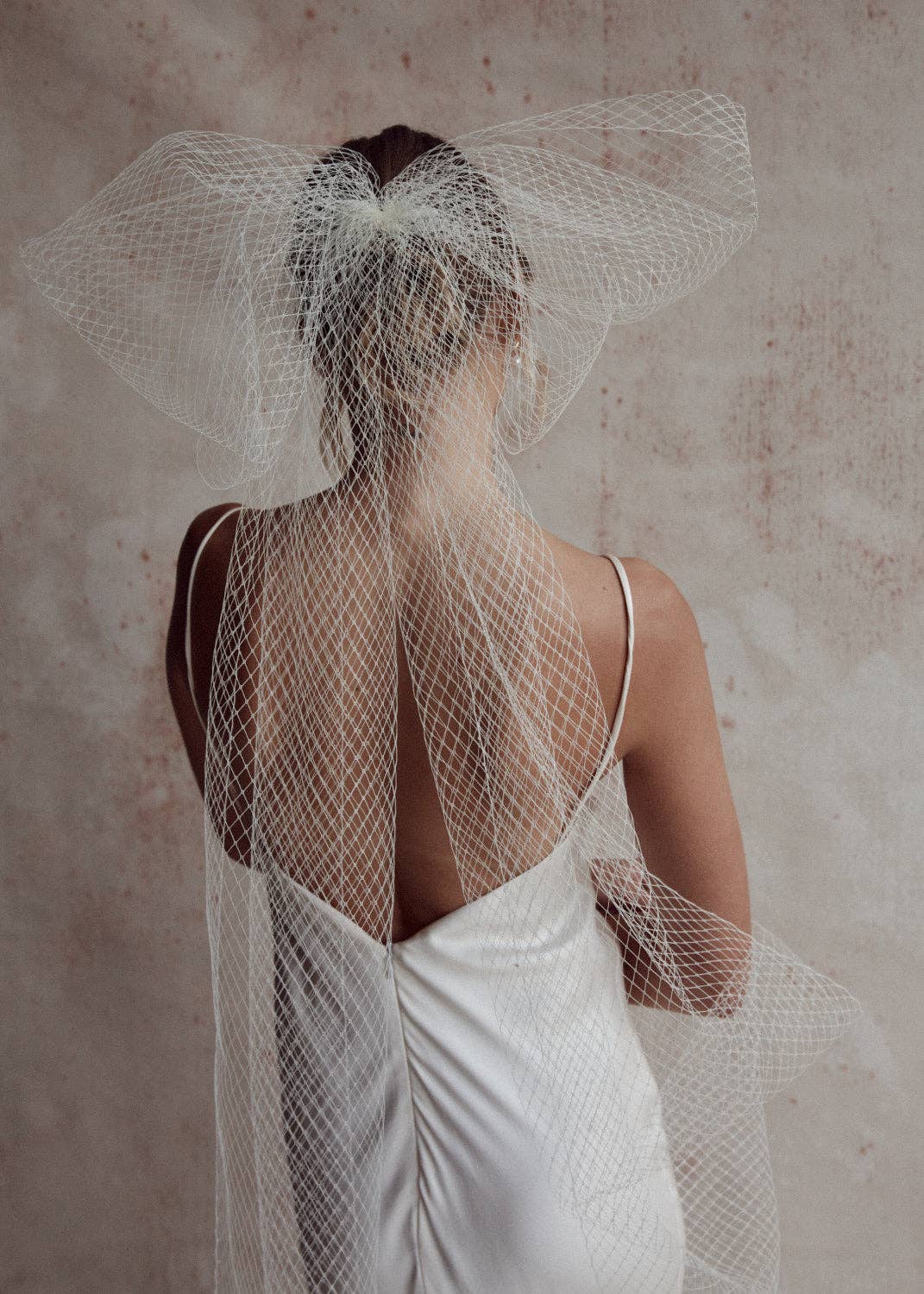
The wedding is over, the last song has played, the flowers are slowly fading—and there it is: your wedding veil. Too beautiful to put away. Too meaningful to forget. Maybe this is the moment when the question shifts. Not whether you’ll wear it again—but what it gets to be now.
Passing your veil on
There are certain gestures that aren’t planned—and that’s exactly why they feel so special. Passing on your wedding veil is one of them. Not as something you simply hand over, but as a quiet transition. A part of your moment becomes part of someone else’s. Maybe a friend, maybe within your family, maybe at a time that just feels right. Timeless styles—a soft tulle veil, an elegant lace veil, or a classic mantilla veil—carry this beautifully. They’re not tied to one specific look or moment. They hold their relevance over time. Even longer styles—a floor-length veil, a veil designed to extend over a train, or a dramatic cathedral length piece—gain something through this continuity. They don’t lose meaning. They expand it. A veil is rarely made for just one moment. It can move forward.
Reinterpreting your veil
And sometimes, it stays with you—but in a different form. A veil can be reimagined in surprisingly meaningful ways. Soft tulle can become delicate textile details, lace can be transformed into small keepsakes that live quietly in your everyday life. One especially beautiful idea is turning your veil into a canopy for a baby’s crib—light, soft, and full of meaning. Other options include heirloom handkerchiefs, hair accessories, or subtle textile pieces for future celebrations. A lace-trimmed veil or a detailed statement veil often lends itself particularly well to this, thanks to its structure and craftsmanship. It’s not about replacing the veil. It’s about letting it evolve.
Keeping your veil as it is
And then there’s the simplest, most understated choice: keeping it. A wedding veil doesn’t need to be transformed to remain meaningful. Sometimes its strength lies in staying exactly as it was. A carefully preserved tulle veil, a refined blusher veil, or a flowing piece in cathedral length often holds enough presence on its own.
Final thoughts
What you do with your wedding veil after the wedding isn’t a decision between right and wrong. It’s a decision about what feels right. Whether you pass it on, reinterpret it, or simply keep it—the most beautiful choice is the one where it doesn’t disappear. Because a veil may have its defining moment in a single day. But its meaning doesn’t have to end there.


