

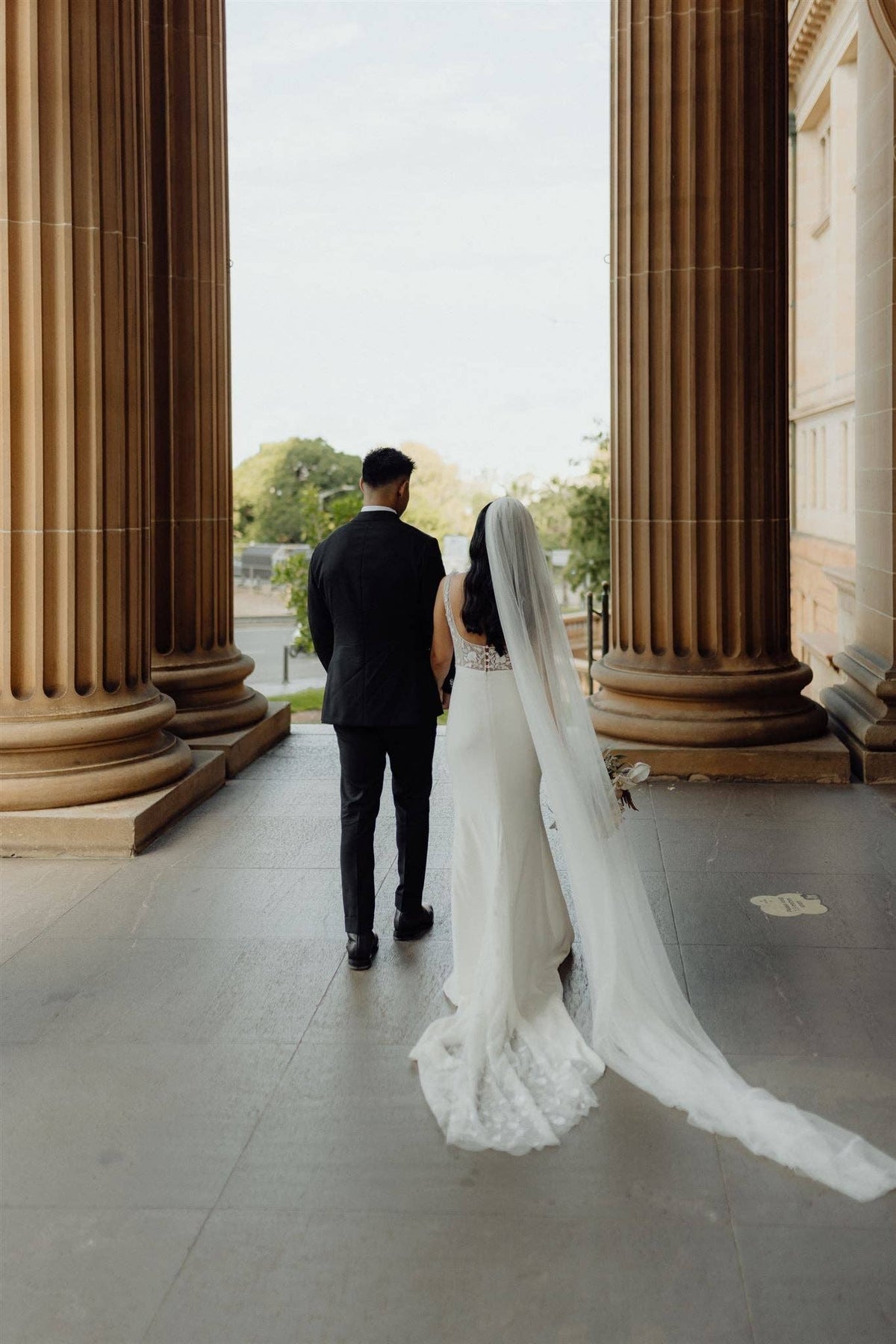
A wedding veil is one of the few bridal pieces that carries more than just aesthetic value. It holds history. Not just style, but symbolism. Not just a tulle veil, but something that once meant much more.
And yet today, it feels surprisingly light. Almost as if you’re free to keep what resonates—and quietly let go of the rest.
What does a wedding veil symbolize?
Historically, the veil has meant different things across cultures. Protection, purity, transition into a new chapter—each interpretation layered with meaning.
Today, that symbolism is far more open.
A wedding veil doesn’t need to represent anything specific anymore. It can simply carry whatever meaning you choose to give it. For some brides, it’s a moment of romance. For others, a sense of occasion. And for many, it’s just that quiet feeling that the look is finally complete.
The blusher veil still reflects this tradition most clearly. The soft covering of the face, followed by the moment it’s lifted, feels like a ritual within the ceremony itself. And maybe that’s exactly why it continues to feel so special.
Who wears and lifts the veil?
The obvious answer: the bride.
The more interesting question is who becomes part of that moment—who adjusts it, who lifts it, who shares in that gesture.
Traditionally, it was often the person walking the bride down the aisle. In many ceremonies, the partner lifts the veil just before the kiss.
And today?
Today, the bride decides.
A wedding veil is no longer about rules. It’s part of the look, part of the atmosphere—and sometimes simply part of a gesture that feels right without needing explanation.
Who removes the veil?
There’s no fixed answer anymore.
The blusher veil is usually lifted during the ceremony—by a parent, the partner, or the bride herself. The main veil—whether a tulle veil, a lace veil, or a mantilla veil—often stays on through the ceremony and the first moments of celebration.
Later, it’s usually removed for practical reasons.
Longer styles like cathedral length, a veil designed to extend over a train, or even a full floor-length veil, are made for the entrance. For the movement, the photos, the presence. Less so for the dance floor.
In reality, it’s often a bridesmaid, a close friend, or a stylist who helps remove it—not because tradition requires it, but because a veil secured with countless pins rarely lends itself to spontaneity.
How long does the bride wear the veil?
Most often, the veil belongs to the ceremony—and then quietly disappears.
Not because tradition demands it, but because it simply makes sense. A long veil looks breathtaking during the entrance and in photographs, but a little less practical once the celebration begins.
Shorter styles like fingertip length can be worn longer, as they move more easily. A more dramatic lace veil or a piece in cathedral length usually belongs to the more formal part of the day.
Final thoughts
Traditions can offer guidance. But they don’t have to define anything.
A wedding veil can hold meaning. It can be symbolic, emotional—or simply a beautifully considered styling detail.
And sometimes, that’s exactly enough: that it feels right.


