

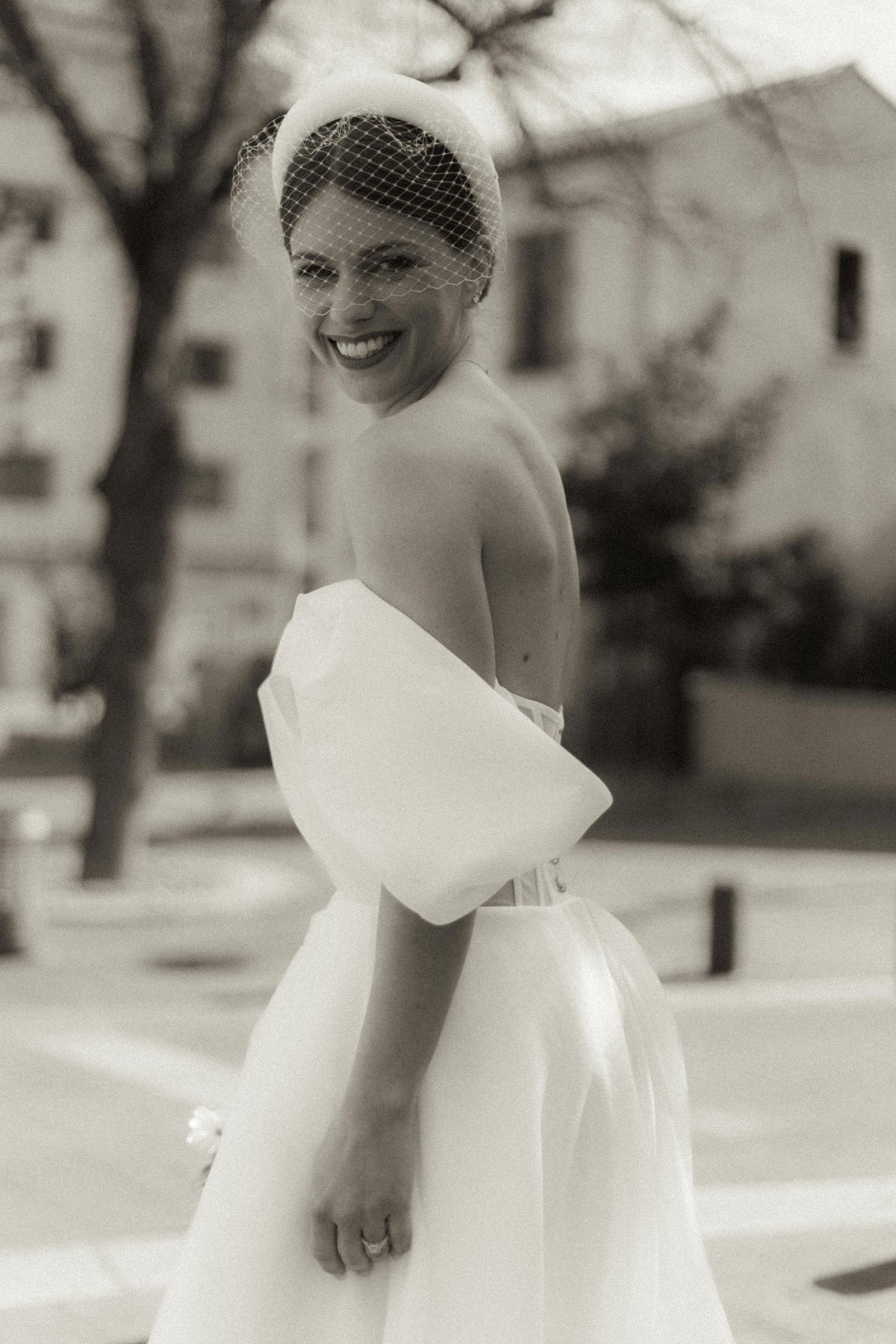
A wedding veil is often the moment when “this is my dress” becomes “this is my bridal look.” Not because it changes everything—but because it brings everything together. And that’s exactly why it shouldn’t be an afterthought. The right bridal veil should work with your dress, your style, and the feeling you want to carry into that day. Because the difference between a tulle veil, a lace veil, a drop veil, a blusher veil, or a dramatic cathedral length piece isn’t just visual—it’s about how the entire look feels.
1. Choosing the right color: ivory or white?
Color is often the quiet decision that makes the biggest difference. A white veil feels crisp and cool. An ivory veil feels softer and warmer. And because the difference is subtle, it tends to stand out more than expected once everything comes together. A white veil paired with an ivory dress can feel too stark. An ivory veil with a bright white dress can look slightly off. The simplest rule is also the most important one: your wedding veil should truly match the dress. At LOVE, PAULI all our veils are in a "silk white" tone. One that perfectly matches any shade of white or ivory.
2. Length: how long should your veil be?
Length defines how your look is read. A fingertip length veil is one of the most versatile options. It feels elegant, light, and works beautifully with many silhouettes. If your dress has a train, your veil should follow that line. Ideally, it’s at least as long—or slightly longer. That’s why a veil designed for a train, a floor-length veil, or a cathedral length veil feels especially cohesive with more dramatic gowns. Shorter veils tend to feel more modern and effortless. Longer veils create presence—and that one unmistakable bridal moment.
3. Lace or no lace?
If your dress features lace, your veil should speak the same language. It doesn’t have to be identical—but the style, texture, and feeling should align. A lace veil or a lace-trimmed veil feels particularly harmonious when it echoes the detailing of the dress. A mantilla veil is a classic example: softly framed with lace, falling gently around the face, and especially striking when paired with a dress that shares its romantic tone. A clean tulle veil, on the other hand, feels more minimal. More modern. More understated. In the end, it’s not about rules—it’s about balance.
4. Simple, lace, or statement piece?
There are no rules here. A minimal veil can perfectly balance a detailed dress.
A statement veil can bring a simple gown to life. A true statement veil often comes from that balance—not from more detail, but from the right detail.
5. Blusher veil, drop veil & modern classics
A blusher veil adds movement and intention. The double layer, covering the face before being lifted, creates a moment—subtle, but powerful. A drop veil feels softer and more fluid. It’s placed over the head rather than gathered, creating a clean, almost weightless effect. Because of its construction, it’s all about how it’s worn and styled.
6. Birdcage & civil wedding looks
Not every look calls for a traditional veil. A birdcage veil or a short double layered blusher veil is a modern, often underestimated alternative. Short, light, usually made from netting—and exactly because of that, perfect for a civil wedding look. It feels elegant without being overdone. Especially for city weddings, shorter dresses, or very clean silhouettes, this kind of veil creates a different kind of bridal moment—less traditional, but just as intentional.
Final thoughts
Choosing the right wedding veil isn’t about following rules. It’s about noticing what works. Pay attention to the color. Let the length work with your dress. If your dress has lace, your veil should echo that direction. And whether you choose a tulle veil, a lace veil, a blusher veil, a drop veil, a birdcage veil, or a true statement piece—it doesn’t come down to what you’re supposed to wear.


